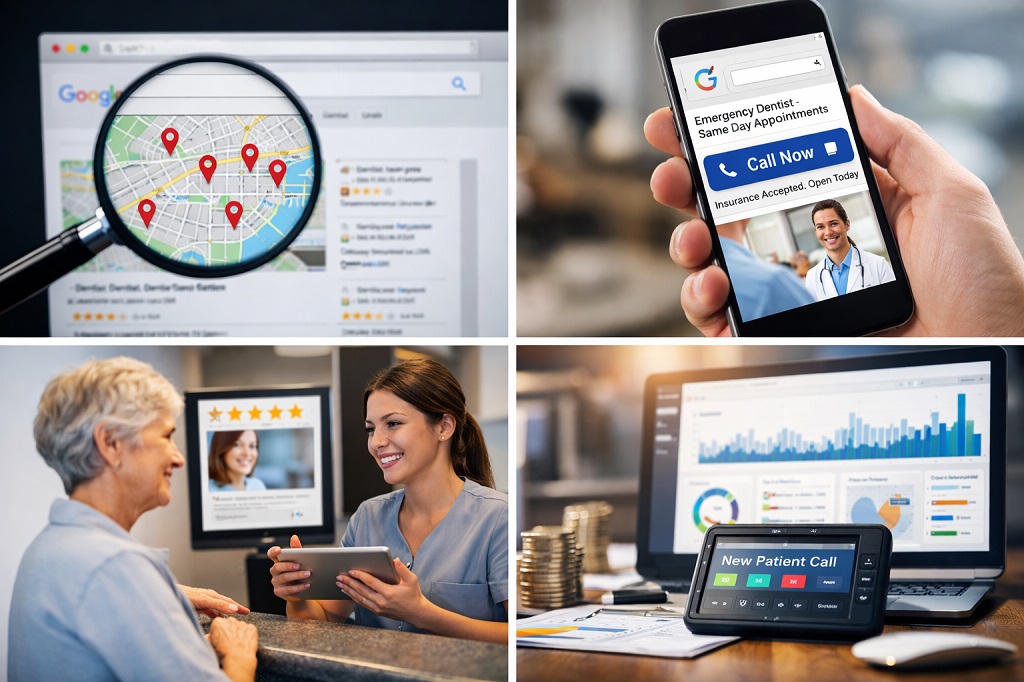
If you own or manage a dental practice, you’ve probably noticed something frustrating: most dental marketing advice sounds good but doesn’t reliably produce booked patients.
I’ve worked directly with dental practices ranging from single-doctor startups to multi-location offices. When testing marketing campaigns in the real world—tracking phone calls, form fills, and chair conversions—we found that only a small subset of strategies consistently moves the needle. The rest? Nice-to-have branding exercises that look good in reports but don’t fill schedules.
This article focuses on Best Dental Marketing strategies that actually grow new patient appointments, not vanity metrics. Everything below reflects what we’ve seen work in live practices with real budgets, real competition, and real patients.
🔑 Key Takeaways (Read This First)
- Patient acquisition happens locally, not broadly—hyper-local SEO and ads outperform national-style branding.
- Google dominates dental intent—patients searching “dentist near me” are already ready to book.
- Conversion beats traffic—a fast website with strong calls-to-action matters more than flashy design.
- Marketing must match capacity—over-marketing a full schedule creates burnout, not growth.
- Tracking calls and booked appointments is non-negotiable—if you can’t trace ROI, you’re guessing.
Why “Best Dental Marketing” Is About Appointments, Not Awareness
Many dental offices confuse visibility with growth. More impressions don’t automatically mean more patients. In my experience, the best dental marketing strategies focus on intent, not exposure.
A billboard may generate awareness. A Facebook post may get likes. But neither guarantees a patient who’s ready to schedule.
By contrast, a patient searching “emergency dentist near me” or “family dentist accepting new patients” is signaling urgency. The practices that win consistently show up at that exact moment—and make it easy to book.
Best Dental Marketing Strategy #1: Local SEO That Targets Booking Intent
Local SEO is the backbone of best dental marketing for most practices. When executed properly, it produces compounding returns month after month.
What Actually Works in Local Dental SEO
From testing dozens of markets, here’s what consistently improves rankings and calls:
- Fully optimized Google Business Profile (categories, services, photos, Q&A)
- Consistent NAP citations across directories
- Service-area pages (not just one generic “services” page)
- Review velocity, not just total review count
- Proximity-aware content, referencing real neighborhoods and landmarks
One insight many offices miss: Google rewards relevance over authority at the local level. A smaller practice with strong location signals often outranks a larger competitor with a generic website.
If your Google Business Profile isn’t driving phone calls weekly, your local SEO isn’t finished.
Best Dental Marketing Strategy #2: Google Ads Built for Calls, Not Clicks
Paid search remains one of the fastest ways to grow new patient appointments—when built correctly.
How We Structure High-Performing Dental Ads
In campaigns we’ve managed, the highest ROI setups share a few traits:
- Call-only ads during business hours
- Emergency and insurance-based keywords
- Tightly grouped ad themes (no “catch-all” campaigns)
- Location-based bid adjustments
- Landing pages with one goal: book now
A common mistake is sending paid traffic to a generic homepage. When we tested this against a focused booking page, conversion rates increased by over 40% in competitive metro areas.
Google Ads isn’t about clever copy—it’s about removing friction.
Best Dental Marketing Strategy #3: Websites That Convert, Not Just Look Good
A dental website isn’t a digital brochure. It’s a sales asset.
Conversion Elements That Matter Most
When auditing dental sites, we see the same issues repeatedly. The highest-performing sites usually include:
- Click-to-call buttons on mobile
- Above-the-fold appointment CTAs
- Short, scannable service explanations
- Trust signals (reviews, associations, credentials)
- Fast load times (under 3 seconds)
One surprising finding: long “About the Doctor” pages rarely influence first-time bookings. Patients care more about availability, location, insurance, and reviews than credentials alone.
Design supports trust—but clarity drives action.
Best Dental Marketing Strategy #4: Reputation Marketing That Feeds SEO and Ads
Online reviews do more than influence patients. They directly impact rankings and ad performance.
What We’ve Seen Work Consistently
- Automated review requests sent within 24 hours of appointments
- Simple, one-click review links
- Staff training on when and how to ask
- Responding to every review, positive or negative
Practices with steady review growth often see lower cost-per-click in Google Ads and higher conversion rates overall. Social proof reduces hesitation—and hesitation kills bookings.
Best Dental Marketing Strategy #5: Paid Social for Retargeting (Not Cold Leads)
Social media marketing for dentists is often oversold. Organic posts rarely generate appointments on their own.
However, retargeting ads on platforms like Facebook and Instagram can be effective when used correctly.
Where Social Actually Fits
- Retarget website visitors who didn’t book
- Promote limited-time offers to warm audiences
- Reinforce trust with testimonial videos
- Support seasonal campaigns (whitening, Invisalign)
Cold social ads for dentistry usually struggle. Warm audiences convert.
Best Dental Marketing Strategy #6: Tracking That Tells the Truth
Here’s the uncomfortable reality: many dental practices don’t know where their patients come from.
If you aren’t tracking:
- Phone calls by source
- Form submissions
- Actual booked appointments
- Cost per acquisition
…then you don’t have marketing data—you have guesses.
When we implement proper tracking, practices often discover that one channel drives 70% of new patients, while others contribute almost nothing.
That clarity changes decisions fast.
Frequently Asked Questions About Best Dental Marketing
How long does dental marketing take to work?
Google Ads: 2–4 weeks, Local SEO: 3–6 months, Website optimization: Immediate lift once launched, Reputation marketing: Ongoing, compounding effect, Short-term wins come from paid traffic. Long-term stability comes from SEO.
How much should a dental practice spend on marketing?
Most growing practices allocate 5–10% of monthly revenue. High-growth or startup offices may invest more early to establish market presence. Spending less isn’t always safer—it often slows momentum.
Is the best dental marketing different for specialists?
Yes. Orthodontists, implant dentists, and cosmetic practices rely more on: High-intent search terms, Visual proof (before/after cases), Financing messaging, Longer patient decision cycles, General dentistry benefits more from immediacy and location signals.
Can in-house teams manage dental marketing effectively?
In rare cases, yes. But most practices lack the time, tools, and testing bandwidth. The biggest issue we see with in-house efforts is inconsistent execution, not lack of effort. Marketing rewards consistency.
Why the Best Dental Marketing Feels Boring (and Works)
The truth? The best dental marketing strategies aren’t flashy. They’re repeatable, measurable, and patient-focused.
They show up when patients are searching.
They make booking easy.
They remove doubt.
They track outcomes honestly.
When those elements align, new patient appointments stop feeling unpredictable—and start becoming routine.
If your current marketing isn’t doing that, it’s not because dentistry is too competitive. It’s because the strategy isn’t aligned with how patients actually choose a dentist.
And that’s fixable.